
A gentle beginning for children—and their parents/caregivers.
Morning Glory
Additional Information and Guidelines for the Parent/Caregiver-Child Program 2025-2026
Welcome
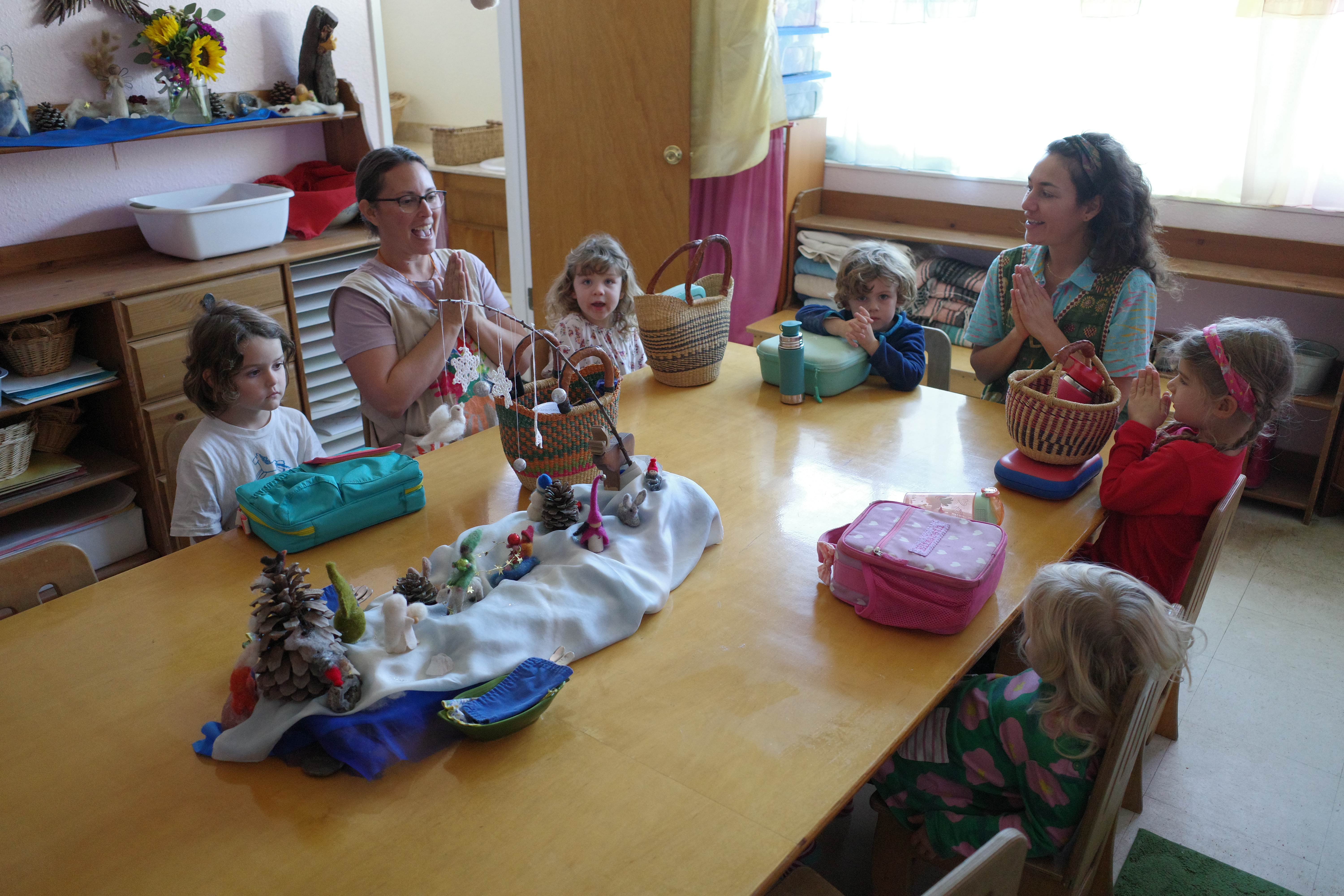
The program is designed to provide a homelike, safe, and nurturing environment for both children and their parents or caregivers as the children take those first steps out of the home and into the world. We will provide playthings from the natural world and simple toys for the children to explore, along with healthy organic snacks for all, songs, rhymes and stories within a model of a rhythmic, structured morning that we hope may inspire home life in some way. We also offer simple crafts for the adults and provide articles about child development and Waldorf philosophy to assist in your parenting journey.
Part of the intention of the parent/caregiver-child class is learning from Waldorf Teachers, how to work harmoniously with the child through mood, gestures (both inner and outer) that match what we say, slow rhythmical voice brought with warmth, soft gentle touch that lowers stress hormones, and conflict avoidance through attentiveness and support that maintains the child’s self-esteem and agency.
Class Offerings and Enrollment Details
We offer early and late morning classes – Monday through Friday – for crawlers and walkers, along with early afternoon classes for prenatal and pre-crawlers.
New classes start seasonally, though enrollment is possible year-round.
- After you submit a registration form, you will receive an email confirmation. Please allow time for us to process all forms. Children are placed in classes according to their age group, and cohort considerations. We aim to keep families together from season to season to deepen friendships and connections as we grow.
- Classes are filled on a first-come, first-served basis, so selecting all sessions you’re interested in (Summer, Fall, Winter, and Spring) helps us plan ahead. If your child’s class is full, we’ll let you know and offer a spot in another class or you may join the waitlist.

GUIDELINES
The following are some guidelines and explanations of what we do to acquaint you with the program. Please take time to read them and keep them handy.
Rhythms of work, wonder, and joy.
DAILY RHYTHM
The daily rhythm will vary slightly based on the class you are in, however, a
typical day will include inside play time while adults are engaged in work/crafts, outdoor play, clean up, seasonal circle time, a story/puppet show, and healthy snack.
Children
Children are free to play or to stay with the parent or caregiver. A natural progression is for the child to stay close to ‘their’ adult at first and to gradually move into play alongside and then with other children. The only expectation for the child is to sit at the table during snack (all food and drink is to be had at the table) and to sit quietly for story. If your child is not yet ready or able to do this, don’t worry, they may simply sit on your lap or you may take them outside for a little walk and then return.
Outside Play and Clothing
We work with water outside and play in the rain so please bring a pair of waterproof outdoor shoes.. Also bring a sun hat on sunny days, beanies on cold days, sunscreen or light long sleeves and pants, along with a change of clothes – just in case! Now is the time to begin to build the habit of wearing appropriate outerwear, especially hats. No matter how often they take it off, you can gently return it to their head. It is especially important that you also wear appropriate head coverings, as imitation is the name of the game with young children. Soon they will know to cover-up in the cold and protect their skin and eyes from the sun all on their own.
Guiding the Young Child
The young child is still closely connected with their parents and when the parent is present they will look to you first for guidance and boundaries. We will step in at times when we feel we can be helpful or if safety is an issue, however each parent (or caregiver) must be aware of and supervise their child.
It is important to remember that these young ones are just beginning to learn social skills. The concept of sharing will only come slowly and cannot be expected until 4 or 5 years of age. The children are in the process of learning and practicing these social skills as we are practicing parenting skills. We all need patience and compassionate understanding.
Even at this stage, children can often work out differences themselves, if we give them a chance. Therefore, we suggest that you not intervene too quickly (unless safety is an issue) and when necessary, try stating what you observe; “I see you both want the ball,” and perhaps adding, “I wonder if there is another ball.”
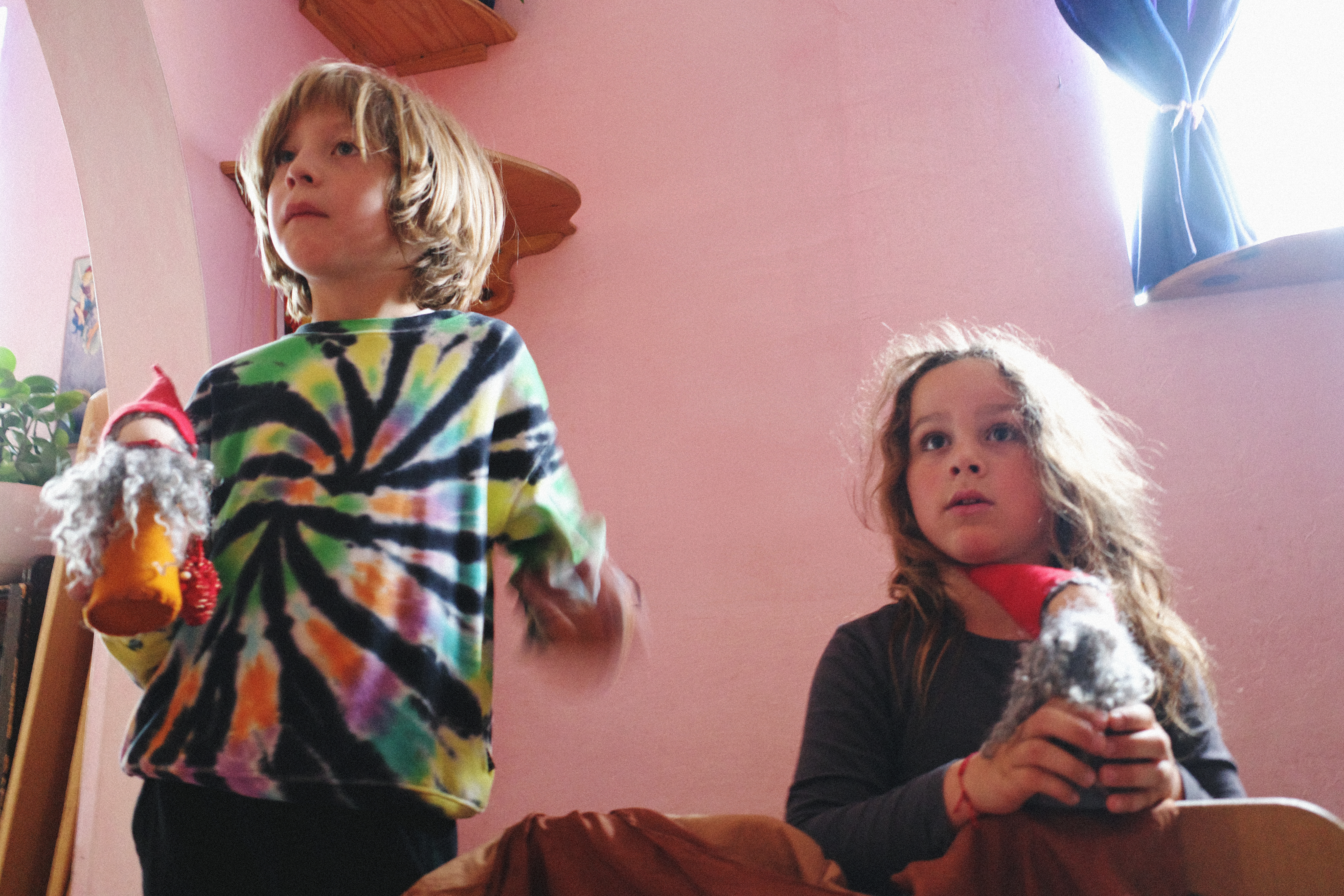
Simple redirection is effective with very young children and rather than asking, “What do you want to do?”, the child is helped more by a statement like, “The gnomes could have a house over here!” or “I hear a baby crying. Let’s take her for a walk.” This requires imagination from us, but it’s worth the effort.
Sometimes there is simply no solution to the desire for the same thing and the toy itself may need to be removed to ‘take a rest’ and come out to play again later.
There are no recipes that always work, and age and development must be considered, but there are some ‘helpful hints’:
- Statements accompanied by action are more effective than explanations and negotiations
- Little stories and imaginations generate interest and change behavior
- Consistency, rhythm and repetition are a parent’s best friends and a child’s
- “Say you’re sorry” doesn’t work – this is another concept that comes later. Rather than a forced apology, present your child with something to imitate, by showing your concern for the other child who has been hurt by asking if they are okay and if they need help.
- Limit “no” to the really important things.
Healthy rhythm and environment are good for discipline. This is an endless topic and we wish to respectfully learn from one another.
9. Good-bye –
We will close our day with a brief good-bye verse or song that signals to the children our time together has come to an end for the day. Children are often tired and hungry at this time and when the parent’s attention is distracted the children are left unattended, this can be a time for tantrums and accidents to occur.
There is often a very short turnaround time before another class comes, so we must ask you to leave the classroom/yard as soon as possible. It is best for other reasons as well that goodbye time is really a closing and doesn’t become the time for conversation as the adults linger to talk.
Media
Join our community of families moving toward a screen-free childhood.
Our ideal is that the young child would not be exposed to any media and/or screens in all various forms. There is growing research and evidence that modern technology is detrimental to healthy development in young children. Even our middle school parents are discussing a policy that would have all students without phones until graduating from eighth grade due to detrimental effects of social media on the young teenager. Please ask if you want to know more. We will share articles and want to explore this topic together with you.
Parent Meetings
At times, we will have meetings that are open to Morning Glory parents. These are designed for a more focused time of discussion and questions around parenting and child development without the “little pitchers with big ears” being
present – a time for ‘adults only’.
12. Registration –
Our Parent Child Program will have sessions focused on particular developmental stage groups for children of any age up to 40 months old. Each session requires pre-registration. This helps us to keep the classes at a comfortable size and to plan ahead. Pre-registration includes payment. It is important to pre-register to insure your space. There are no credits, refunds or
make-ups unless the school is forced to cancel a class unexpectedly.
Siblings – It is a gift to spend this time with your enrolled child. However, it is possible for younger siblings in arms to attend the older child’s class at no charge. It may be best to leave newborns at home for some time as they will be exposed to normal childhood colds and the like.