
Waldorf Compared to Montessori and Reggio Emilia — What Makes Each Unique, and Where Waldorf Stands Out

Quick Descriptions
Montessori
- Founded by Dr. Maria Montessori, this approach emphasizes independence, choice, and order. Classrooms are designed with carefully selected materials. Children choose activities and work in multi-age groups, often without much teacher interruption. (Garden House)
- Learning through hands-on work is emphasized —math, reading, and practical life skills with specially crafted objects. (Garden House)
Reggio Emilia
- Reggio Emilia centers around child-led projects, where children’s interests drive learning. Teachers listen, document, and co-construct knowledge with students. The environment (physical space, materials, displays) plays a key role in inspiring and facilitating learning. (NAEYC)
- Emphasis is placed on collaborative learning, artful documentation, parent participation, and flexibility in curriculum driven by inquiry.
Waldorf
Waldorf (based on the development of schools from the indications of Rudolf Steiner) offers a whole-child approach that integrates emotional, spiritual, artistic, and academic growth. For Waldorf schools, learning isn’t just about content—it is about being, wonder, ritual, and cultivating a meaningful relationship with the world.
Art & Imagination
Montessori
Some emphasis, especially in materials
Reggio Emilia
High emphasis, especially in documentation and expression
Waldorf
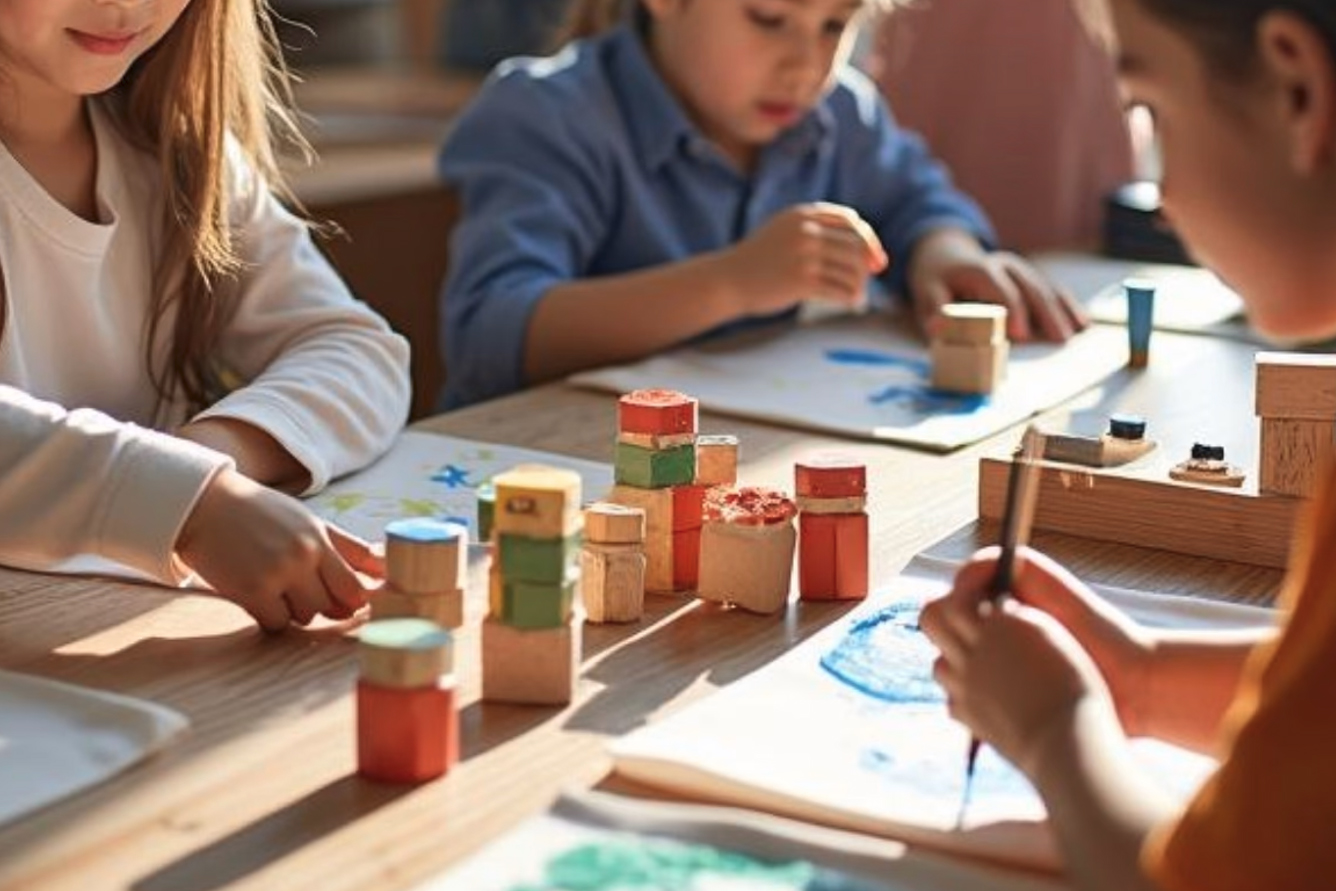
Arts are incorporated in every daily lesson. Art is considered essential to the complete development of the human being. Artistic modes include, but are not limited to: music, painting, modeling, drawing, drama and puppetry.
Rhythm & Repetition
Montessori
Less structured daily rhythm; more individual choice

Reggio Emilia
More flexibility, project-based flow
Waldorf
Strong rhythmic structure (daily morning verses, movement or circle time, main lessons, crafts, seasonal festivals)This is based on the understanding that a strong routine and rhythm provide security so that the child can comfortably relax into the environment; can depend on the routine and with ease, learning and healthy social development can occur.
Introduction of Academics / Respect for Developmental Pace
Montessori
Montessori often introduces academic tasks early using concrete materials
Reggio Emilia
Reggio Emilia projects can include the introduction of early academics – such as reading/writing – depending on child interest.
Waldorf
Waldorf nurtures moral imagination in an age appropriate way through stories, tales, and later biographical studies. The incorporation of art in the curriculum builds the soul and feeling life that supports this moral nurturing. Finally, the movement and practical arts like handwork, gardening and woodwork foster the will to take action on the growing moral forces. This enables the student intrinsically to grow into a human being that in freedom has developed their individual moral compass to guide them in the world.
Teacher Preparation & Continuity
Montessori
Teachers often trained, but more variety in practice
Reggio Emilia
Teachers often act as co-researchers and collaborators with students
Waldorf
Waldorf teachers are encouraged to follow classes with the same group of students for long periods, valuing continuity and the importance of the student- teacher relationship to the learning process. Teachers are trained in methods that are specific to the needs of the. Pedagogical understanding of the artistic, spiritual, and developmental needs of the students.
Putting it into Practice
Here are ways Waldorf’s strengths translate into how your child might experience school:
They begin the day with a handshake with their teacher or circle time to, seasonal songs or verses, and stories—not worksheets.
Crafts, nature walks, handwork, organic gardening lessons and art are not “extras” but integral parts of every week.
Teachers are especially attuned to the development of the whole child. : they provide a curriculum that respectfully meets them at a developmental ,academic, and soul level; allowing them to grow into free thinkers so that they can contribute to the world.
Morality, ethics, kindness, community, reverence – these are the outcomes of an education that understands the true development of the human being and, in freedom, leads them to their purpose in the world.
Morality, Reverence, and Community in a Changing World
In today’s world—where children are constantly exposed to rapid media cycles, global uncertainty, and cultural polarization—the Waldorf approach offers a vital counterbalance. Waldorf education prioritizes morality, ethics, kindness, reverence, and community not as abstract lessons, but as a part of the original mission for the development of the pedagogy over 100 years ago.
Through curriculum stories, community festivals, and the deeply thoughtful curriculum, children are invited to live into compassion and empathy. Instead of simply learning “right and wrong,” they experience beauty, wonder, and reverence for the world, —the ability to place themselves in another’s shoes and act with integrity.
Equally important is the emphasis on community building. In Waldorf schools, children learn that their growth is intertwined with the wellbeing of others. This sense of interconnection becomes the seed for resilience, respect, and meaningful citizenship in a challenging world climate.

Parent and Caregiver Participation
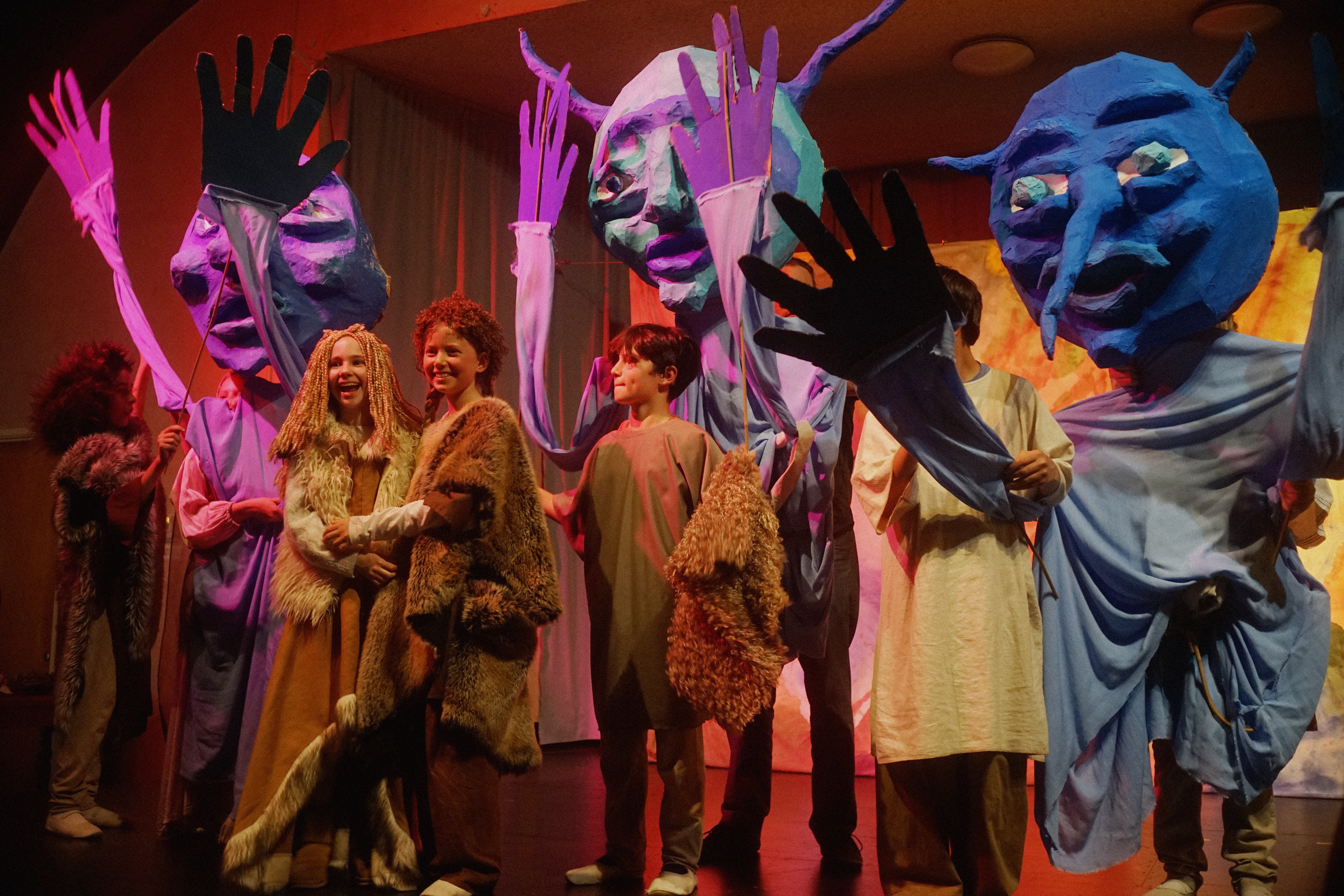
Unlike many educational models, Waldorf schools extend the circle of community to parents and caregivers. Participation is not only encouraged, it is seen as essential to the health of the school.
Families are invited into the life of the school through:
Volunteerism at campus beautification days.
School festival participation—bringing the joy of shared tradition.
Field trip support, ensuring children can safely explore the wider world.
Committee and class parent work, helping to sustain the school’s rhythm and vision.
This partnership nurtures a vibrant and inclusive community where children feel held not only by teachers, but also by the larger web of parents, caregivers, and friends.
Waldorf and Media Use: Protecting Childhood
Another defining feature of Waldorf education is its intentional relationship with media and technology. Waldorf schools emphasize protecting the wonder of childhood by limiting early exposure to screens and encouraging play, creativity, and direct human connection instead.
On campus, most schools uphold strict phone-free policies. Children are not permitted to use smart devices during the school day, and families are encouraged to model mindful tech use at home.
This philosophy aligns with the growing “Wait Until 8th” initiative, a national movement that empowers parents to delay giving smartphones to children until at least eighth grade. The initiative recognizes the mounting evidence that early smartphone use can negatively impact children’s mental health, social skills, and attention spans.
By limiting media exposure, Waldorf schools give children the space to develop imagination, resilience, and focus—qualities that will serve them well in an increasingly digital world.
Parent/Caregiver Testimonial
Courtesy of Daiga Atvara (former Montessori parent and WSSD alum parent)
Montessori classes start with the teacher saying, “And now find your place to be successful,” meaning: find a spot in the room that best suits your current state of mind and body. It could be on the floor, in a chair, standing – whatever works. I loved that approach. It was fascinating to watch how quickly the kids scattered to their preferred place, and how the room instantly became quiet, peaceful, and focused. It also taught them to take responsibility for the outcomes of their behavior.
Each class had more teacher assistants, which meant more personal attention. Montessori doesn’t have the traditional setup of a teacher standing at the front facing neatly seated kids with a blackboard behind them. For some children that environment works; for others it doesn’t. Some need more structure, so it’s hard to say what’s “better” overall.
Montessori is not as community-centered as Waldorf. Parents are not as involved and there isn’t the same emphasis on forming a close, family-like community as there is in Waldorf. Interestingly, the Montessori teacher greets each kid at the classroom entrance the same way Waldorf does.
Montessori aims to bring out each child’s abilities and talents individually, rather than having everyone move at the same pace. The grade level doesn’t matter as much; what matters is where the student is in each specific subject. A child might be doing 5th grade level math while still at a 2nd-grade level in English, for example.
Montessori is centered on the individual child, their learning style, their way of understanding the world, and their pace of progress. Waldorf is centered on the developmental stage of the child’s age group. Waldorf also emphasizes learning how to be part of a group regardless of individual talent. It encourages helping others and going deeper into each subject rather than simply going faster or covering “more.”
Waldorf gives children more space and time to reflect, to do things that aren’t always measurable. In a way, you could call it spirituality or the ability to see beyond the obvious.
I do think there are things Waldorf could incorporate from Montessori like “finding your place to be successful,” or placing less emphasis on grade levels in certain areas, because we are all built differently as individuals.
In Conclusion
All three educational approaches—Montessori, Reggio Emilia, and Waldorf—offer thoughtful, child-centered environments. However, Waldorf’s gift is a developmental pedagogy that intrinsically embeds moral and artistic development, as well as intellectual growth is what sets it apart from the others.
If you’re making decisions about education, it helps to visit schools using each model, observe classrooms in action, and reflect on what resonates most deeply for your child—and for your values.
Free Training Evaluation
Get The Obedient Dog Of Your Dreams!
Ac feugiat ante. Donec ultricies lobortis eros, nec auctor nisl semper ultricies. Aliquam sodales nulla dolor. Semper leo et sapien lobortis facilisis aliquam feugiat ut diam non tempus et malesuada.


0 Comments